What should an acrylic display packaging specification cover?
A useful packaging specification identifies how every visible surface, edge, corner, loose component and branded area is protected; how movement inside the carton is prevented; and what the buyer expects to see on labels, packing lists and receiving records.
- Protective film status and removal instructions
- Individual separation between clear surfaces
- Edge, corner and projection protection
- Accessory bags kept away from acrylic faces
- Inner quantity, master-carton quantity and carton marks
- Packing photos or approved pack-out reference
Should custom displays ship assembled or flat-packed?
The decision depends on structure, freight volume, damage exposure and who will assemble the unit. An assembled display reduces store setup but can use more carton volume. A flat-pack or sub-assembly approach may improve packing density, but it transfers assembly work and requires controlled hardware, instructions and an approval test.
Why do carton dimensions matter as much as gross weight?
Parcel and freight carriers may use dimensional or volumetric weight when a shipment occupies substantial space relative to its mass. Buyers should request packed dimensions, gross weight, units per carton and pallet assumptions before comparing landed cost. The applicable formula and divisor depend on carrier, service and trade lane, so they must be checked against the actual quotation.
How should clear surfaces, edges and loose parts be controlled?
Clear faces should not rub against other acrylic panels, hardware or the carton wall. A packaging review should confirm separation layers, fixed positions, buffers around vulnerable edges and a method for containing screws, magnets, feet or printed inserts without allowing them to move across finished surfaces.
What packaging evidence should a buyer request?
Request evidence that matches the risk and distribution route rather than accepting a generic 'export carton' statement. This may include a packed sample, carton dimensions and weight, pack-out photos, opening sequence, assembly instructions and an agreed package test plan. ASTM D4169 provides a framework for evaluating shipping units against distribution hazards, but the buyer and supplier must agree whether a particular test method and level applies.
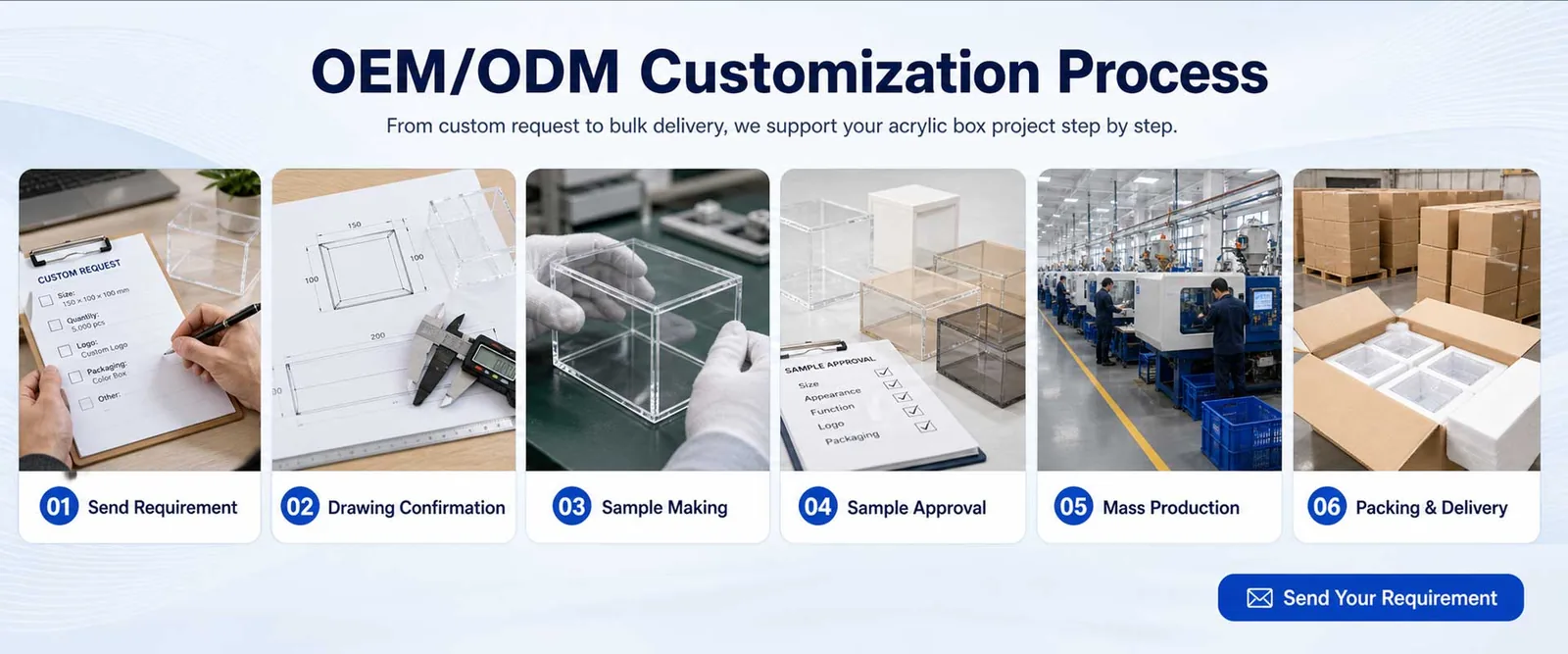
- One approved packed sample or pack-out record
- Carton specification and packing quantity
- Photos showing inner restraint and closed carton marks
- Accessory checklist and assembly instruction revision
- Agreed inspection or transport-test requirement
- Damage-report and receiving-document procedure
Which shipping and commercial terms need written confirmation?
A quotation should identify the named place and version of the agreed Incoterm, transport mode, packing included in price, estimated packed data, document scope and the party responsible for freight, insurance, customs and destination handling. A product unit price alone is not a landed-cost comparison.
What should the receiving team inspect?
Before signing off the delivery, record carton condition, count labels and visible impact or moisture evidence. Open a defined sample of cartons, check parts against the packing list, retain photos and report discrepancies within the agreed claim window. The purchase contract or carrier terms—not this guide—control notice deadlines and remedies.
How this buyer content is maintained
Published and reviewed by Yiwu Zhuochao Plastic Products Co., Ltd. Company facts are checked against the assessed Alibaba supplier profile; product and process guidance is based on the supplier’s current manufacturing scope and project-review workflow. Fixed MOQ, price, timing, certification and performance claims are not published without supporting evidence.
Frequently asked questions
Should protective film remain on acrylic displays during shipping?
The project specification should state which surfaces retain film, when it is removed and whether printing or bonding areas require a different treatment. Do not assume one rule fits every finish or assembly.
Does flat-pack shipping always cost less?
No. It can reduce packed volume for suitable structures, but may add hardware, instructions, assembly labor and setup-error risk. Compare landed cost and execution responsibility, not carton volume alone.
What packed data is needed for a freight estimate?
Ask for carton length, width, height, gross weight, units per carton, carton count and pallet assumptions. The forwarder also needs origin, destination, transport mode and service terms.
Should packaging be approved with the product sample?
Yes, when packaging risk is material. Approving a display without its intended pack-out leaves surface protection, movement, labeling and assembly presentation unresolved.
Can Zhuochao confirm shipping cost before the display is defined?
A reliable freight comparison needs at least a defined design, quantity, delivery state, packing concept and destination. Final commercial and logistics assumptions belong in a written quotation.