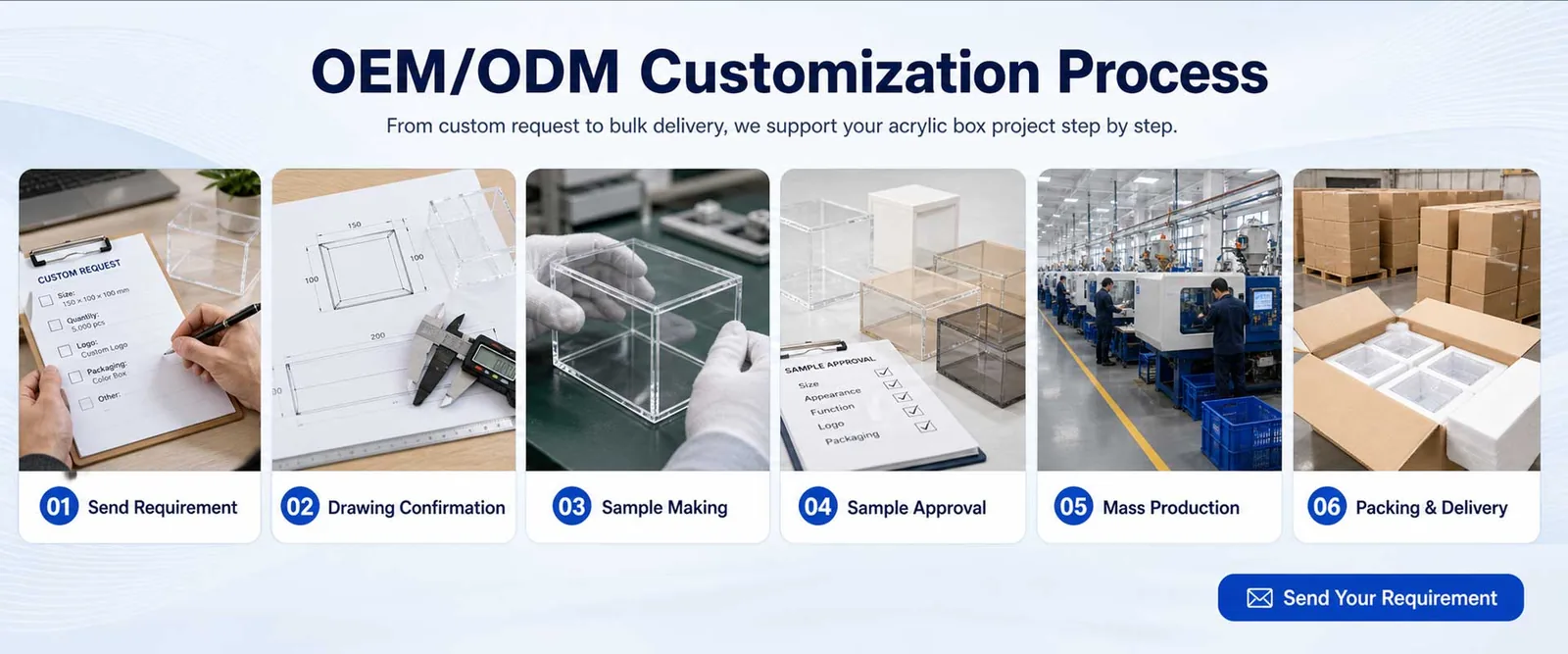
Step 1: What belongs in the buyer brief?
Define the displayed product, installation environment, overall size, load, quantity, branding, packaging, destination and target date. Reference photos are useful, but measured product data prevents avoidable redesign.
Step 2: How are structure and materials confirmed?
The supplier reviews manufacturability, stability, material choice, thickness, edge treatment, joints, printing and packing. Questions and assumptions should be closed before a sample or tool is produced.
Step 3: What should be approved on the sample?
Approve appearance and measurable requirements separately: dimensions, stability, finish, color, logo position, assembly and protective packaging. The approved sample and drawing become the reference for production inspection.
Step 4: How is production quality controlled?
Production should follow the approved reference and written inspection points. Buyers should agree the inspection stage, acceptable tolerance, defect handling and photo or report requirements before the order starts.
Step 5: How should acrylic displays be packed for export?
Acrylic surfaces require scratch protection, movement control and carton strength appropriate to the display shape. Confirm protective film, inner cushioning, carton quantity, marks and any assembly instructions before shipment.
How this buyer content is maintained
Published and reviewed by Yiwu Zhuochao Plastic Products Co., Ltd. Company facts are checked against the assessed Alibaba supplier profile; product and process guidance is based on the supplier’s current manufacturing scope and project-review workflow. Fixed MOQ, price, timing, certification and performance claims are not published without supporting evidence.
Frequently asked questions
Can OEM work begin without a technical drawing?
Yes. Product dimensions and reference photos can begin the discussion. A controlled drawing or written specification should still be approved before volume production.
When is a custom mold required?
It depends on material and structure. Fabricated acrylic components may not require a mold, while injection-molded plastic parts generally do. The supplier should confirm the production route during design review.
Who owns the logo artwork and tooling?
Ownership and permitted use should be written into the quotation or order before payment. Do not rely on assumptions.
How can buyers avoid sample-to-production differences?
Approve measurable tolerances, retain a signed reference sample and define the inspection method and defect handling before production.