
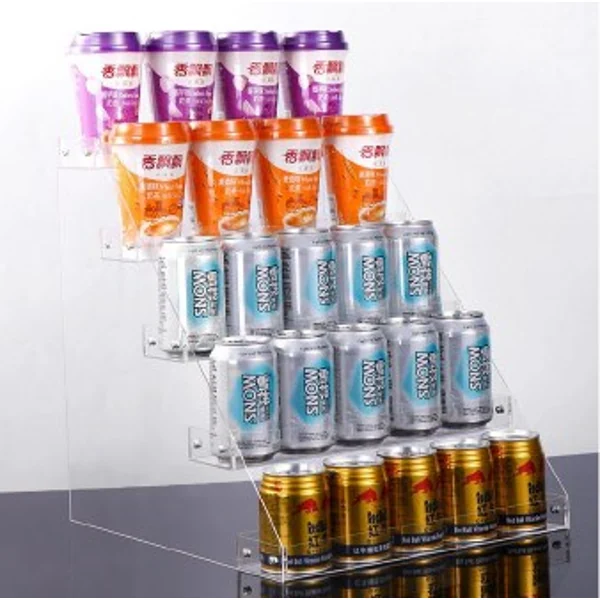
What decides whether a bottle display is safe on a counter?
The ratio between the loaded height and the base footprint, plus what stops the bottle moving forward when it is lifted. A tall unit on a small base is the combination that tips, and no rated capacity is published for these items, so the weight of your actual bottles and the number of facings are needed before the geometry is drawn.
How do you handle bottles of different heights on one unit?
Group by height and put the tallest at the back, because a tiered stand is read from a standing position and the back row is the one that disappears first. Where a range mixes squat liqueur bottles with tall wine bottles, the honest answer is often two units rather than one stepped stand that compromises both.
Why does a bottle rack usually need a front stop?
Bottles are lifted vertically, so a hand pulling one out pushes the row forward. A front lip, a rail or a recessed seat keeps the row in place between restocks. On a sloped display the same lip also stops the bottle rotating as it settles.
What changes when the unit stands on the floor instead of the counter?
Height, base and anchoring. A floor unit is leaned against by shoppers and cleaned around, so the base needs to be wider relative to height and the unit is usually fixed or weighted. The material choice also shifts, because a taller panel with the same thickness deflects more.
How this buyer content is maintained
Published and reviewed by Yiwu Zhuochao Plastic Products Co., Ltd. Company facts are checked against the assessed Alibaba supplier profile; product and process guidance is based on the supplier’s current manufacturing scope and project-review workflow. Commercial terms and performance statements are published only where the owner can support them. Third-party certification issued by Intertek (天祥集团) is documented on the certification page; unit prices are quoted per project and are not published.
Frequently asked questions
Can the rack be made for a specific bottle diameter?
Yes. The pitch between positions is set from the widest bottle in the range plus the clearance needed to lift one out. Send the diameters and heights across the line rather than a single bottle, and the spacing is drawn from the widest one.
Is a locked cabinet available for high-value bottles?
Where a unit is drawn with a door or a lockable cover, it is part of the structure and is quoted with it. Say at the drawing stage whether the unit must be locked overnight, because the door, hinge and frame change the construction.
How are bottles protected in transit?
The display ships without bottles, so the packing question is about protecting the acrylic unit itself: film, interleaving and an export carton sized for the destination. Carton volume for a tall unit is often the largest cost line after production, which is why knocked-down versions are common.